Field-Tested Equipment

Tools That Support Real Nightlife Security Work
Nightlife security is not an office job, and it is not a controlled environment.
It is loud. It is fast. It is low-light. It is crowded. And when pressure builds, small advantages matter.
That is where equipment comes in.
The right equipment does not make someone good at the job. It does not replace judgment, awareness, or positioning. But it does support the work in real ways when the environment starts moving fast.
This page is built around gear that actually makes sense inside nightlife environments — tools that help with communication, visibility, organization, and operational consistency.
Why Equipment Matters in Nightlife Security

Most people think of equipment as something tactical.
That is usually the wrong mindset.
In nightlife, equipment is less about looking prepared and more about staying functional inside an environment that constantly works against you. Loud music affects communication. Low lighting affects visibility. Crowded rooms make movement harder. Fast shifts in pressure reduce reaction time.
That means even basic tools can make a real difference.
The point is not to carry more gear. The point is to carry what actually helps you do the job better.
What works in a nightclub or strip club is usually simple, reliable, and easy to access under pressure.
Communication Is Still the Most Important Tool
If one piece of equipment matters more than anything else in nightlife security, it is communication.
A team that cannot communicate clearly inside a loud venue will always be behind. Problems develop faster. Information gets delayed. Coverage breaks down because people are forced to guess instead of adjust.
That is why radios and earpiece systems matter so much.
They help the entrance stay connected to the floor. They help security communicate with management. They help teams call out pressure early without making the room feel tense or disrupted.
The best communication tools are not complicated. They just need to be reliable, clear, and practical for the environment.
The Door Requires Simplicity, Speed, and Visibility
The entrance is one of the most important places for equipment to do its job well.
At the door, security is checking IDs, reading people, pacing entry, and staying aware of the line, the threshold, and the environment inside. That means tools need to support speed and clarity, not slow things down.
Low-light visibility matters. Organization matters. Communication with the inside team matters.
This is where simple, practical tools make the most sense. The job is already busy enough. Equipment should help decisions happen faster, not create more steps.
When the entrance is handled correctly, the rest of the night runs cleaner.
Equipment Supports Awareness — It Does Not Replace It
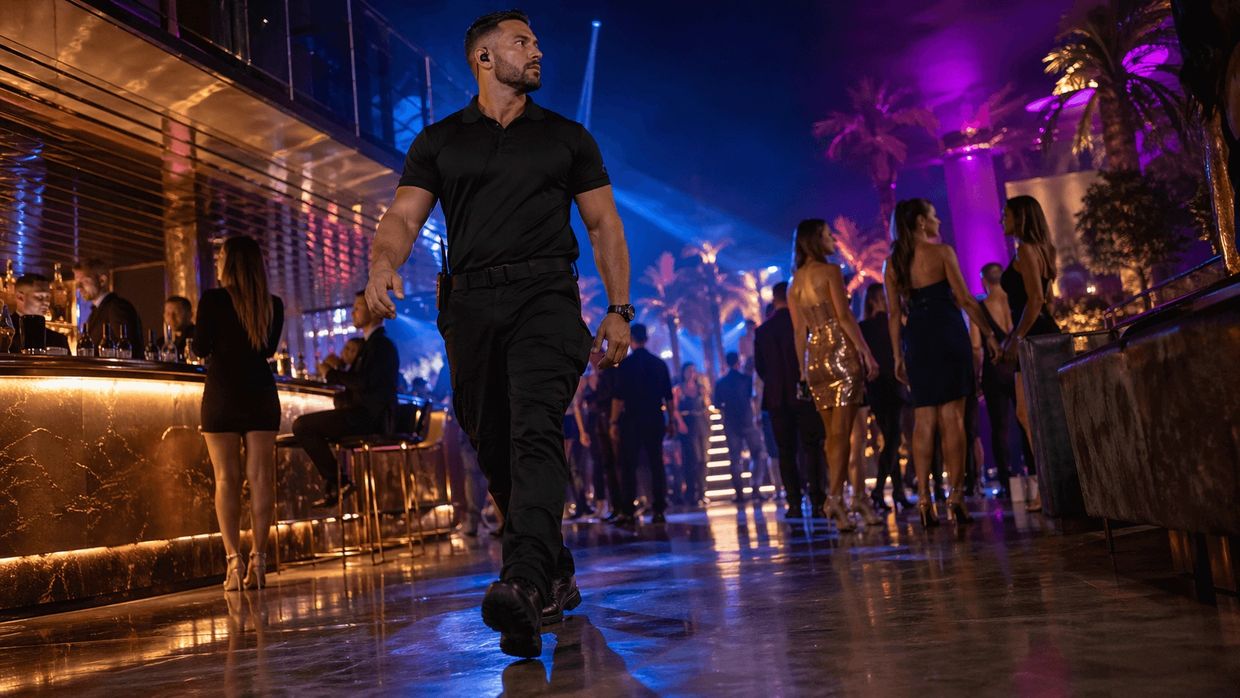
This is where people get equipment wrong.
No radio, flashlight, pouch, notebook, or tool is going to replace awareness.
You still need to read the room. You still need to understand pressure. You still need to know where to stand, when to move, and what matters in real time.
Good security comes from judgment first.
Equipment simply helps support that judgment. It helps you communicate faster. It helps you stay organized. It helps you operate more efficiently in environments that are loud, dark, and constantly shifting.
That distinction matters.
Without awareness, equipment becomes decoration. With awareness, the right tools become useful.
The Best Equipment Is the Equipment You Actually Use Well
Good equipment helps. Bad equipment gets in the way.
In nightlife, that difference shows up quickly.
The right gear will not make someone professional. But it will support professional work when it is chosen with the environment in mind.
That means:
- Reliable communication
- Simple visibility support
- Practical organization
- Tools that match the role
- Tools that hold up in real conditions
That is what field-tested means.
Not impressive on paper.
Useful on shift.